
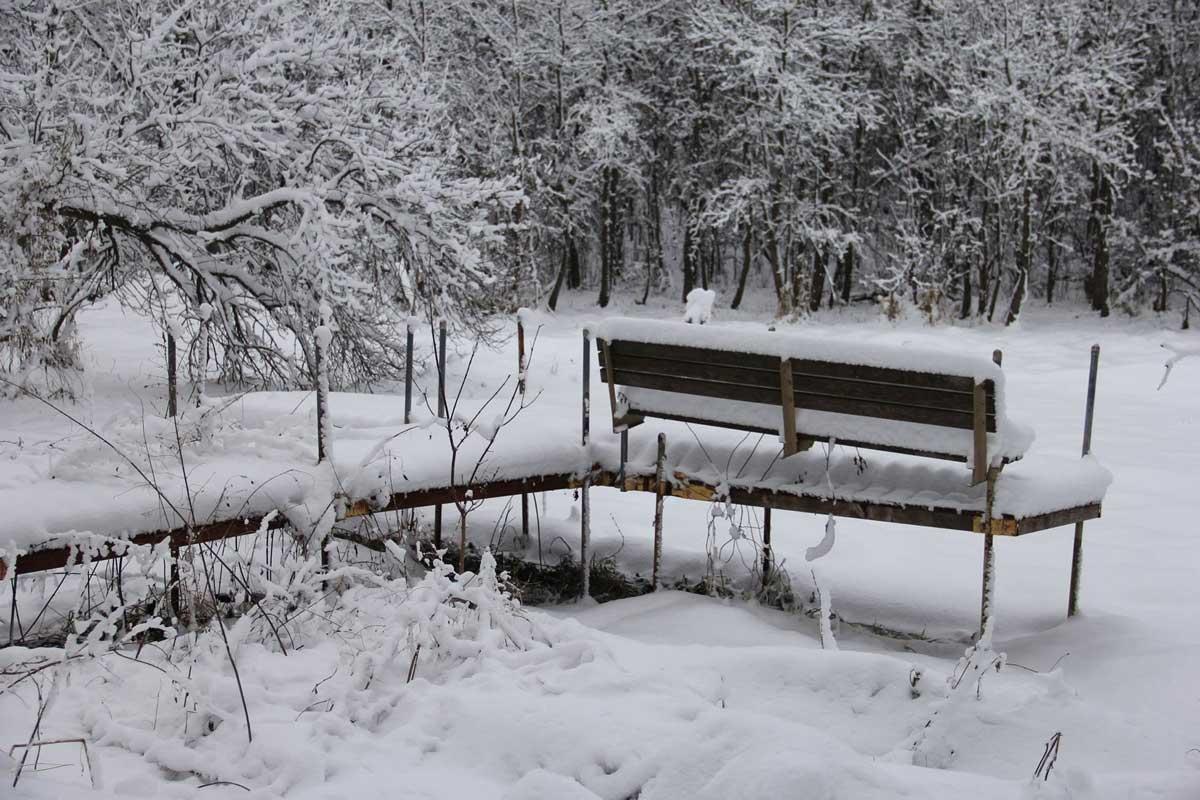
Can You Leave a Dock in the Water Over Winter?
Usually, no. In Iowa, a dock on public water has to be out before December 15 unless your permit exempts it or it sits in one of a short list of sheltered waters named in the state rules, and even then it needs reflective markings and has to be able to ride out normal ice movement. Other states write their rules differently, but the ice works the same everywhere. Sectional and roll-in docks should come out every fall, because ice locks around the legs and moves them. A floating dock can sometimes stay in a protected harbor or canal with slack anchors, but on an open natural lake it's safer on shore.
Key Takeaways
- Iowa's rule is one date: docks on public water come out before December 15, unless a permit condition or a named exemption applies.
- The exemptions are narrow, mostly canals, harbors, and bays, and they still require reflective markings.
- Sectional and roll-in docks come out every year, because ice locks around the legs and moves them.
- A floating dock stops floating once the water's solid, and then it travels with the ice sheet.
- Bubblers open thin ice that other people can fall through, and in Minnesota a permit is required.
Is it legal to leave your dock in over winter in Iowa?
Iowa makes this simple, which is probably the easiest part of winter. The state's dock rules say every dock comes out of public water before December 15 and stays out until spring. There are exceptions, but they're narrow and specific, and you have to meet them exactly. You can read both the removal rule and the exemption rule on the Iowa DNR's Class 1 private dock page, rules 16.3(6) and 16.18.
Several of the exempt spots sit right here on the Iowa Great Lakes. The rule names artificial lakes, Upper Gar Lake, the canals off West Okoboji, Okoboji Harbor, the Lazy Lagoon portion of the Triboji dock management area, Smith's Bay on West Okoboji, the stretch between the trestle and the U.S. Highway 71 bridges on the Okoboji lakes, and Templar Park on Big Spirit Lake. Outside the Iowa Great Lakes it adds a few spots at Clear Lake, Storm Lake, Black Hawk Lake, Lake Manawa, and Carter Lake.
What they have in common is that they're canals, harbors, bays, and impoundments, water where the ice has room to sit still because something's blocking it or shaping it. The open basin of West Okoboji or Big Spirit isn't on the list. The DNR says why in the rule itself: ice damage is generally greatest on Iowa's rivers and natural lakes.
Even on listed water, the exemption isn't a free pass. A dock left in has to have reflective material visible from every direction. Snowmobiles and iceboats are out there all winter, and a dock buried in drifted snow is invisible at night. A dock that ice movement can still damage has to come out anyway. And if you want the exemption written into your own permit, you have to document that normal ice movement won't damage the dock. Rules change, so read your permit and call your DNR district office if you're not sure. Our guide to Iowa dock permits covers the rest of the rulebook.
What does ice do to a dock that stays in?
It moves the dock. That's the whole problem, and people miss it because they picture ice as a solid sheet that holds everything still. In January, for a few weeks, it can look that way. It isn't.
A lake's ice sheet cracks as it cools. Water seeps into the cracks and freezes, and the sheet gets a little bigger. Warm up a few degrees and it expands again. All of that growth pushes toward shore with a lot of force. Minnesota's DNR calls the result ice jacking, and its guidance on ice ridges lists docks and boat lifts among the usual casualties, along with retaining walls and sometimes the cabin. Their advice for avoiding it is the same as ours: get the property out of the way before the ice forms.
Here's what that does to each part of a dock:
- Legs and posts. They freeze into the sheet. When the sheet shifts, it drags the legs sideways, bends braces, and can pull legs up off the bottom. A dock that went in level can come out of winter racked. You won't see it until you go out to check in the spring.
- A floating dock. It stops floating. Once the water around it is solid, the dock is part of the ice sheet, and it goes where the sheet goes, pulling on anchors the whole way.
- Spring can be worse than midwinter. At ice-out, wind can push loose plates of ice across a lake and pile them on whatever's standing near shore. The damage shows up in April, not January.
No dock is ice-proof. That includes ours.
Which docks have to come out, and which can stay?
Match the decision to the dock and the water. Here's how we walk customers through it.
Sectional docks
Out, every year, everywhere. A sectional stands on legs and adjustable anchor plates, and that's exactly the part of a dock that ice grabs. The good news is that coming out is the job a sectional was built for. Our sectional wood docks and sectional aluminum docks use the Walk On Water system: sections of about 80 pounds, a winch that raises and lowers one section at a time, and every step done standing on the dock, out of the water. Our walkthrough on removing a dock by yourself covers the order of operations.
Roll-in docks
Out. A roll-in sits on wheels in shallow water near shore, which is right where ice push does its worst work. Rolling it up the bank is a simple job, so there's no reason to gamble with it.
Floating docks
This is the only type where staying in is a real option. In a sheltered canal or harbor on the exemption list, with the right markings, a well-built floating dock can winter in place. On an open natural lake, pull it. The question is how much the ice moves at your frontage, and the person who knows that best is usually a neighbor who's watched it for twenty winters, or your local dealer. Ask someone who's been there.
Swim platforms and rafts
Out, unless your permit says otherwise. Iowa's rules put rafts and platforms under the same winter removal requirement as docks. A platform anchored out in open water is also the most exposed structure on the lake once the ice starts moving.
If your floating dock is staying in, what do you need to do?
If your water's exempt and you've decided the dock stays, set it up for the winter it's going to face.
- Confirm you're allowed. Check that your frontage is on the exemption list or that your permit carries the exemption. Don't go on a neighbor's word. Their frontage may not be your frontage, and the rules are specific to the water you sit on.
- Mark it. Put reflective material on the dock that's visible from every direction, and check it after snowfalls. In Iowa that's a requirement. Anywhere else it's just sense. A dock buried in drifted snow is invisible to a snowmobile at night.
- Give the anchors slack. Water levels move over a winter. Chains or cables pulled tight in October can be carrying the dock's whole weight in March. Loosen them.
- Strip it. Ladders, benches, bumpers, cushions, railings. All of it comes off and goes inside. A winter of ice and drifted snow is hard on all of it, and you'll be replacing it in the spring if you leave it out.
- Watch it from shore. Look after big temperature swings and again at ice-out. Don't walk out to check unless you know the ice will hold you.
A word on bubblers and de-icers. They keep a patch of water open around the dock, and open water on a frozen lake is a hazard to everyone else on the ice. Minnesota's DNR requires a permit for aeration systems and thin ice signs around the open water they create, and the state's aeration statute covers bubbler and water circulation systems that keep water open on public lakes. Rules differ by state, so check with your DNR before you plug one in. If you need a bubbler running all winter just to keep your dock alive, the dock's probably in the wrong water for staying in. That's worth thinking about before you commit to it.
What about Minnesota and Wisconsin?
Iowa is unusually clear: one statewide date, one written list of exceptions. Other states handle docks through their own permits, exemptions, and local rules, and that's where it gets complicated. Wisconsin's DNR, for one, notes in its 2026 pier planner that some municipalities have their own pier ordinances, with their own restrictions or local permits. So if your lake is in Minnesota or Wisconsin, start with your DNR and your town or county, not with what the Iowa rule says. The Iowa rule doesn't travel across a state line.
The ice does. That's the part that stays the same. Our advice holds everywhere we sell docks: if it can come out, take it out.
Where VW Docks fits
We've built docks for cold northern lakes since 1959, and the dock we started with was designed around this exact problem. VW Docks was the first dock company to design a sectional Western Red Cedar dock that one person could install, remove, raise, and lower without getting in the water. On a lake that freezes, the dock you can get out yourself every fall is the dock that lasts. For deep, soft, or protected water, our residential floating docks are custom built on hot-dipped galvanized steel or aluminum frames with roto-molded float drums, and professional installation is available. Our commercial floating docks are built to U.S. Army Corps of Engineers standards for marinas and resorts. If you're not sure which fits your frontage, our guide to choosing the right dock for your lake and shoreline walks through it.
Frequently Asked Questions
Can I leave my floating dock in if I run a bubbler?
Not in Iowa, unless the dock's on exempt water or your permit carries the exemption. A bubbler eases ice pressure at the dock, but it doesn't change the removal rule, and the open water it makes is a hazard you're responsible for. If you're in Minnesota, you also need a permit for the aeration system itself.
What happens if I leave my dock in on the open lake?
In Iowa you're out of compliance, and the DNR can modify, suspend, or revoke a permit for violating its terms. The bigger risk is the dock. You won't see what the ice did to it until ice-out, and by then the damage may be done.
Do I have to take my swim raft out too?
In Iowa, yes, unless your permit specifically exempts it. Rafts and platforms fall under the same winter removal requirement as docks. A raft also needs its own permit and reflectors visible to approaching boats. If yours has neither, that's worth fixing before next summer, not next winter.
How do I know if my frontage is on the exemption list?
Start with rule 16.18 on the Iowa DNR's dock pages, which names each exempt area. Several of the Iowa Great Lakes listings are described by landmarks, such as the canals off West Okoboji or the stretch between the trestle and the Highway 71 bridges. If you're near a boundary, call your DNR district office and ask before you decide.
Not sure whether your dock should come out, or where your water lands on the exemption list? Find your local VW Docks dealer, who's almost certainly watched your lake freeze, or contact us and describe your shoreline. If this is the winter you start planning a dock that's easier to get out, request a quote.
Share This Post
Comments
Read Our Other Blog Posts.
