
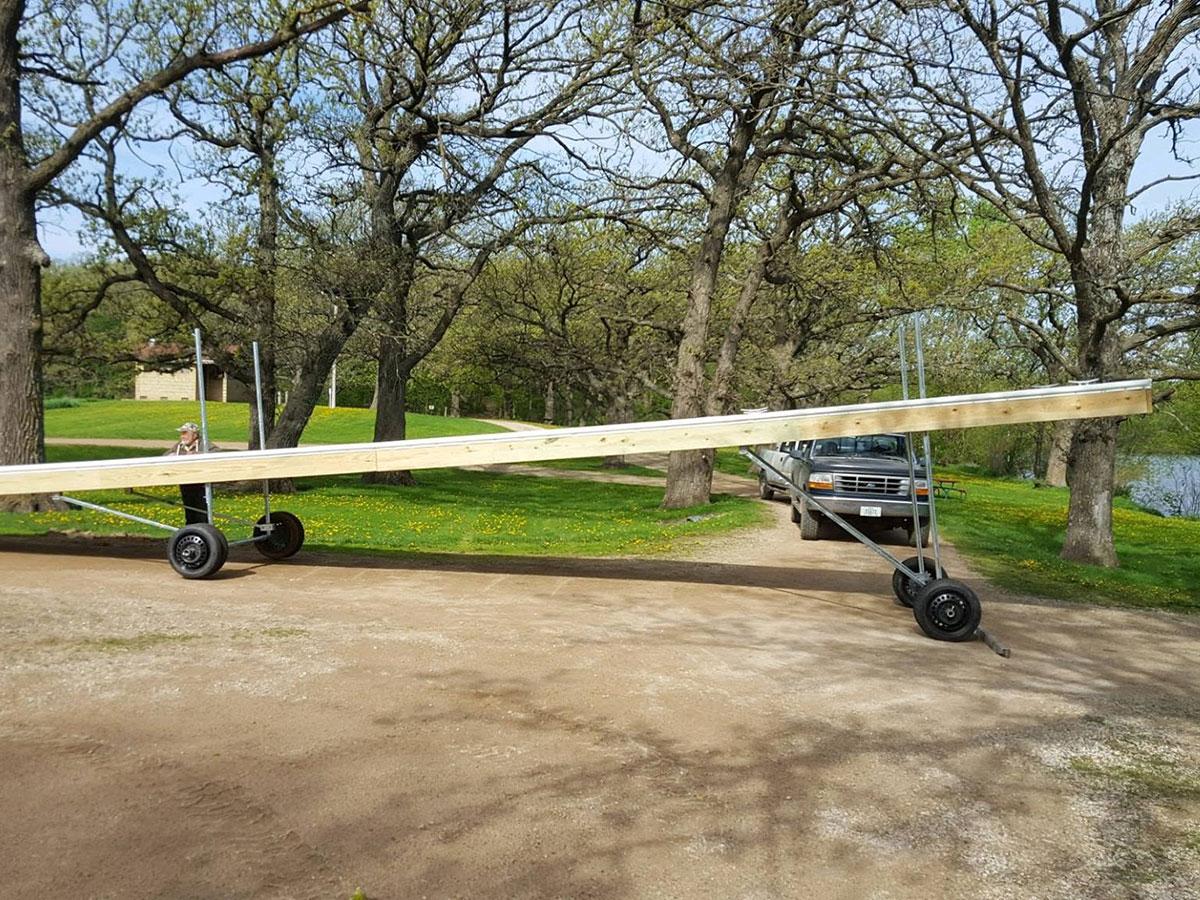
How to Remove a Boat Dock by Yourself This Fall
In Iowa, your dock has to be out of public water before December 15 each year unless your permit specifically exempts it. In practice you want it out well before that, while the water is still open and the weather is still workable, which puts most Iowa Great Lakes owners in a late September to October window. A sectional dock comes out the same way it went in: one section at a time, from on top of the dock, using the winch system, with nobody getting in the water. Plan on a morning for a standard straight run. Pull the accessories first, work back toward shore section by section, and stack everything up off the ground for the winter.
Key Takeaways
- Iowa requires docks on public water to be removed before December 15 unless a permit condition exempts them.
- A handful of Iowa Great Lakes waters are on the exemption list, but the exemption is narrow and has to be earned.
- A VW Docks sectional comes out one section at a time, from on top of the dock, without getting in the water.
- Pull accessories and the hoist first, then work from the water end back toward shore.
- Store sections up off the ground and out of standing water, not flat in the grass.
When does your dock legally have to come out?
Start with the rule, because plenty of owners do not know it exists. Iowa's dock rules require each dock to be removed from public waters before December 15 of each year, and not reinstalled until the following spring, unless that requirement is waived by a condition of your permit. It sits in the same chapter that governs your dock permit and 911 address signage, and you can read the standard requirements on the Iowa DNR's Class 1 private dock page.
There are exceptions, and several are local. The rules name specific waters where a dock may stay in, including artificial lakes, Upper Gar Lake, the canals off West Okoboji, Okoboji Harbor, the Lazy Lagoon portion of the Triboji dock management area, Smith's Bay on West Okoboji, the area between the trestle and the U.S. Highway 71 bridges on the Okoboji lakes, and Templar Park on Big Spirit Lake. Even there, a dock left in has to carry reflective material visible from every direction so traffic on the ice can see it.
Read the rest of that rule before you get comfortable, though. Docks subject to destruction or damage by ice movement must be removed, full stop, and the DNR will not authorize an exception unless the applicant documents that the dock will not be damaged by normal ice movement. This is a narrow allowance for sheltered water with the burden of proof on you, not blanket permission. Rules change and your permit carries its own conditions, so check yours and call your district office if you are not sure where you land.
Why not just leave it in for the winter?
Because ice does not push gently.
Ice does its damage by moving. Through the winter a sheet cracks, floods, refreezes and expands, over and over, and all that expansion has to go somewhere. It goes toward your shoreline. Minnesota's DNR calls the result ice jacking, and the ridges it throws up routinely take out retaining walls, docks, boat lifts, and sometimes the cabin behind them. Their guidance on ice ridges is worth two minutes if you have never seen what a bad winter does to a shoreline.
Their advice for avoiding it is what we tell customers: get your property out of the way before the ice forms. The same agency notes in its guidance on docks and access in public waters that permanent structures are more likely to sustain ice damage than temporary ones, which is the whole argument for a removable dock in northern lake country. No dock is ice-proof. Anyone who tells you otherwise is selling something.
Can one person really take a dock out alone?
On a VW Docks sectional, yes. It is the same Walk On Water system that puts the dock in each spring, run in reverse.
Three things make it a one-person job. Sections average about 80 pounds, which a normal adult can handle without a second set of hands. The specially designed winch system does the lifting and lowering one section at a time, so you are never fighting the whole run at once. And all of the work happens above the water, standing on the dock itself. That last one matters more than it sounds. Water on an Iowa lake in late October is cold enough that going in is a genuine hazard, not just an unpleasant afternoon, and doing this work alone in waders is how a routine chore turns into something worse.
Now the limits, because there are some. One person, working steadily, on a standard residential run. Add a full wing, a hoist, and a season's worth of accessories and you have a longer day, and there is nothing wrong with putting somebody on shore to help stack. But you should not need a crew, a barge, or a crane to get your own dock out of your own water.
What is the order of operations?
Work from the water end back toward shore, in this order:
- Clear everything that is not structure. Ladders, benches, boat cushions and bumpers, railings, dock lights, hoses, anything hung off the side. Carry it up and set it aside before you touch a section.
- Deal with the boat and the hoist first. Whatever your arrangement, handle it before the dock goes. Once sections start coming off you have lost your walking surface.
- Take down the 911 address sign and stow it with the hardware. It goes back on in the spring and is easier to find in a labeled bin than in the garage rafters.
- Work section by section with the winch. One at a time, from on top, staying dry. Do not rush this part. The winch is doing the work, not your back.
- Note your leg settings before anything moves. The anchor plates are adjustable, which is why your dock sits level over a bottom that is not. Over the years you have dialed each leg to your own contour. Walk the dock with your phone and photograph every leg before you start, or mark them. Ten seconds apiece in October saves you a long afternoon of trial and error next May.
- Keep the hardware with the dock. Brackets, pins, braces, and fasteners go in a labeled bucket stored with the sections, not loose in a shop drawer where they will be gone by April.
Two reasons the order runs outward to shore. You lose your walking surface as you go, so the far end has to come off while you can still stand out there. And a 4 by 7 cedar section is a sail. On a gusty afternoon it will fight you, which is why a calm morning beats a convenient one. Start early enough that you are not finishing in the dark, and do not let this slide to mid-December, when the job gets done badly or does not get done at all.
One more thing while the sections are on shore. This is the only day all year you handle every piece of your dock with the underside facing you, so look over the brackets, braces, anchor plates, and fasteners as they come off and write down anything worn or wrong. Ten minutes now. Our companion guide covers what those findings mean and when they add up to a dock worth replacing.
How should you store the sections?
Get them up off the ground. Sections stacked flat in wet grass sit in standing water and snowmelt all winter, which is the single condition most likely to undo an otherwise durable dock. Set them on blocks or timbers, keep them level so the frames are not racked, and stack them clear of where snow will drift.
Inside is best. Failing that, an outdoor stack on blocks under a tied-down tarp works, as long as the tarp is not trapping moisture against the wood. Rinse off any algae or muck before they go up. That job takes ten minutes in October and an hour in April.
What about floating and roll-in docks?
Different dock, same deadline. A residential floating dock gets pulled and stored on shore, and the float drums deserve a look on the way out, since flotation trouble shows up first as one section riding lower than its neighbors. A roll-in dock rolls out on its wheels, but still needs the same strip-down and once-over.
If removal is the part of dock ownership you dread every year, pay attention to that. Which dock suits your property comes down partly to your lake bottom and water depth, which our guide to choosing the right dock for your lake and shoreline works through, and partly to whether you can handle it yourself each fall. A dock you cannot get out without hiring help charges you rent every year you own it.
Where VW Docks fits
VW Docks was the first dock company to design a sectional Western Red Cedar dock that one person could install, remove, raise, and lower without getting in the water, and we have been refining it since 1959. Our sectional wood docks and sectional aluminum docks share the same patented pipe casting, adjustable heavy gauge steel anchor plates, and Walk On Water install and removal, with a lifetime warranty on the heavy gauge steel brackets. If your removal turns up hardware that needs replacing, start at our parts page and let your dealer sort it over the winter rather than during the spring rush.
Frequently Asked Questions
What happens if I miss the December 15 deadline?
Winter removal is a condition of the permit your dock sits under, and a permit can be modified, suspended, or revoked for a violation of its terms. The practical risk is worse than the regulatory one, since a dock left in unprotected water through an Iowa winter is exposed to ice movement that can destroy it. If you are running behind, call your DNR district office rather than assuming nobody will notice.
How long does it take to remove a sectional dock?
For a standard straight residential run with the accessories already cleared, plan on a morning. Wing configurations and a heavy accessory load push it toward a full day. The first year always takes longest, and every year after is faster once you know your own dock.
Should I clean the dock before storing it or wait until spring?
Clean it in the fall. Algae and muck come off far more easily before they dry and set over six months, and it means your spring install is just an install instead of an install plus a scrubbing.
Does my boat hoist have to come out too?
Iowa's winter removal requirement comes from a statute covering nonpermanent structures generally, and the dock rules define a boat hoist as a structure placed in the water or below the ordinary high-water mark. So do not assume your hoist follows a different rule than your dock. The published exemption list is written specifically around docks, which is all the more reason to check your own permit conditions with the DNR rather than working from what a neighbor told you.
Not sure whether the dock you own can be handled by one person, or stuck on a step? Your local dealer has almost certainly worked your lake and can tell you in a phone call. If you are weighing a different dock for next season, request a quote or contact us and describe your shoreline.
Share This Post
Comments
Read Our Other Blog Posts.
