
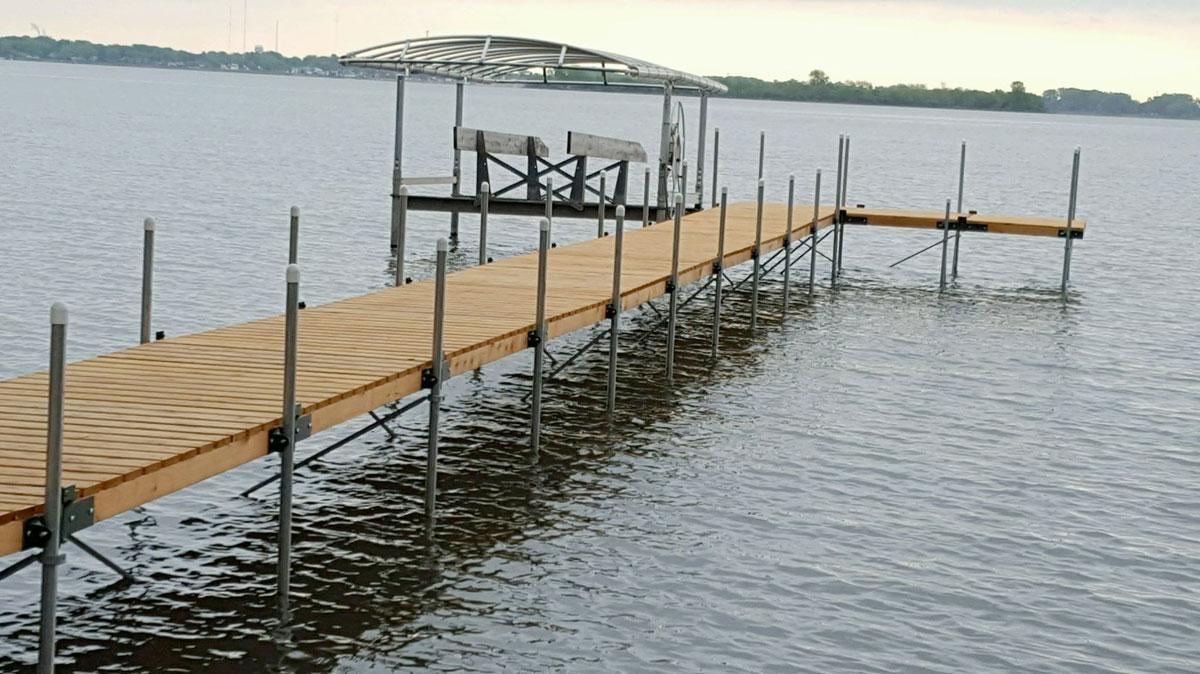
How to Safety Install a Sectional Boat Dock
Installing a boat dock doesn’t have to be a challenge, especially if you’ve done a bit of prep work and have selected a dock designed for easy installation.
Whether you’re drawn to the timeless charm of a wood sectional dock or the modern, low-maintenance appeal of an aluminum sectional dock, this guide will walk you through the essential steps to ensure your installation is both safe and effective.
But if you prefer to leave the heavy lifting to the experts, at VW Docks, we specialize in building sectional boat docks that are easy to install and maintain. Our docks are made of high-quality wood or aluminum and are among the easiest to install and remove on the market. Contact us today to request a quote.
Choosing between wood & aluminum: What’s best for your boat dock?
First, what type of sectional boat dock is right for you?
When it comes to choosing between wood and aluminum, the decision can sometimes be difficult. Each material has its unique advantages and drawbacks, and the right choice depends on your specific needs and preferences. Let’s dive into the key factors that can help you make an informed decision.
Sectional wood docks
Wood docks have long been a favorite for their classic, natural look. They blend seamlessly with the surrounding environment, adding a touch of warmth and charm to any waterfront setting.
However, it’s not just about aesthetics. Wood also has inherent water resistance, which makes it a durable option for many boaters. Species like cedar and treated pine are particularly popular due to their ability to withstand moisture and decay.
Despite these benefits, wood docks do require regular maintenance to keep them in top condition. This includes sealing and staining to protect against the elements and prevent rot. If you’re looking for a wood sectional dock that will maintain its beauty and integrity, be prepared to invest time and effort in ongoing care.
Sectional aluminum docks
On the other hand, aluminum docks offer a modern, low-maintenance alternative. They are lightweight, making them easy to handle and install, and their corrosion-resistant properties mean they can withstand varying water levels without deteriorating. This makes aluminum an excellent choice for areas with fluctuating water levels or where the dock will be frequently moved.
Additionally, aluminum is less susceptible to damage from UV exposure and marine life, ensuring that your dock remains structurally sound and visually appealing over time. If you’re considering an aluminum sectional dock, you can enjoy the peace of mind that comes with minimal maintenance requirements.
Essential tools & materials for dock installation
Now, let’s talk about installation.
Before you dive in, gather your essential tools and materials. Having the right equipment on hand can make the process smoother, more efficient, and ultimately more enjoyable. Start by collecting basic tools such as wrenches, screwdrivers, and a hammer.
These tools will be indispensable for assembling the various components of your sectional dock. Wrenches and screwdrivers are crucial for tightening and securing bolts and screws, ensuring that each section is firmly connected. A hammer will come in handy for driving in stakes or making minor adjustments to the dock sections.
Use a level
One of the most critical tools for ensuring the safety and stability of your dock is a level. Each section must be perfectly balanced to prevent wobbling and potential accidents. Take the time to use a level on each segment as you install it.
This simple step can make a significant difference in the overall safety and usability of your dock. Whether you’re working with a wood sectional dock or an aluminum sectional dock, maintaining balance and alignment is essential.
Dock flotation kits are helpful
For added stability, especially in areas with fluctuating water levels, consider a dock flotation kit. These kits help keep your dock level and stable, even as water levels change.
They are particularly useful if you live in a region with seasonal variations or if your dock will be used in a body of water that experiences significant tides. A well-designed flotation system can enhance the user experience and reduce the risk of damage to your dock.
Site preparation: Laying the groundwork for your sectional dock
Proper site preparation is the unsung hero of a sturdy and functional dock, setting the stage for a flawless installation.
Before you even think about laying down the first section, it’s crucial to choose a stable and level area. This decision not only ensures the safety of those using the dock but also makes the installation process much smoother.
A stable area means the ground or water bed can support the weight of the dock and any boats or people on it. A level area ensures that the dock will sit evenly, preventing any wobbling or tilting that could lead to accidents. Take the time to survey your property and identify the best spot, keeping in mind the natural contours of the land and the water.
Clear the area underwater
Once you’ve chosen the right location, the next step is to clear the installation site of any debris and underwater obstacles. This might involve removing rocks, branches, and other natural or man-made objects that could interfere with the dock’s stability.
Underwater obstacles can be particularly problematic, as they might not be visible from the surface. Clearing the site not only prevents damage to the dock but also ensures that the installation process goes smoothly, without unexpected delays or complications. A clean, obstacle-free site is essential for the longevity and safety of your sectional dock.
Install anchor points
Installing anchor points securely is another critical aspect of site preparation. Anchor points are the foundation of your dock, providing the necessary support to resist strong currents and prevent movement.
Whether you’re using wood or aluminum, the anchor points must be firmly set to ensure the dock remains stable in various weather conditions. Use galvanized or stainless steel anchors to prevent corrosion, and make sure they are spaced appropriately to distribute the weight evenly.
It’s also a good idea to install extra anchor points for added security, especially if your dock will be used for heavier boats or in areas with strong currents. Taking the time to secure these anchor points correctly will save you a lot of trouble in the long run.
Assembly tips: Putting together your sectional boat dock efficiently
With the right assembly tips, putting together your sectional boat dock can be as smooth as the water on a calm morning. The first step is to focus on the dock frame, which serves as the backbone of your structure.
Ensure that all connections are secure to provide the necessary stability. This means taking the time to double-check that each joint is properly aligned and that all screws and bolts are tightened to the manufacturer’s specifications.
Level each section
Once the frame is assembled, use a level to ensure each section is even. This is crucial because any unevenness can lead to wobbling and instability, which can be both annoying and dangerous. Place the level on the top surface of each section and make adjustments as needed.
When attaching sections together, use the provided hardware and check for tight fits. This might seem like a no-brainer, but it’s a step that can often be overlooked in the excitement of seeing your dock come together. Make sure that all bolts and screws are inserted correctly and tightened securely.
Lubricate bolts for smoother assembly
Applying a lubricant to the bolts can make this process smoother and also ensure that disassembly is easier when the time comes. This is especially useful for seasonal docks that need to be taken apart and stored during the winter months. Lubricant not only helps in the assembly but also prevents corrosion, extending the life of your dock.
Frequently Asked Questions (FAQ)
Q: What is the primary trade-off when choosing between wood and aluminum sectional docks?
A: Wood docks offer a classic aesthetic but require regular maintenance like sealing and staining. Aluminum docks are low-maintenance, lightweight, and corrosion-resistant, making them excellent for areas with fluctuating water levels.
Q:What tools are essential for safely installing a sectional boat dock?
A: Basic tools like wrenches, screwdrivers, and a hammer are required, but a level is critical for ensuring each section is balanced and stable. Dock flotation kits are also helpful for stability in fluctuating water.
Q: What are the key steps for proper site preparation?
A: The steps involve choosing a stable, level area for the dock, clearing the site of debris and underwater obstacles, and securely installing anchor points (preferably galvanized or stainless steel) to resist movement.
Q: How can I ensure smoother dock assembly and easier disassembly?
A: Focus on securing all connections and leveling each section of the dock. Additionally, applying a lubricant to the bolts will prevent corrosion and make taking the dock apart for seasonal storage much easier.
Share This Post
Comments
Read Our Other Blog Posts.
