
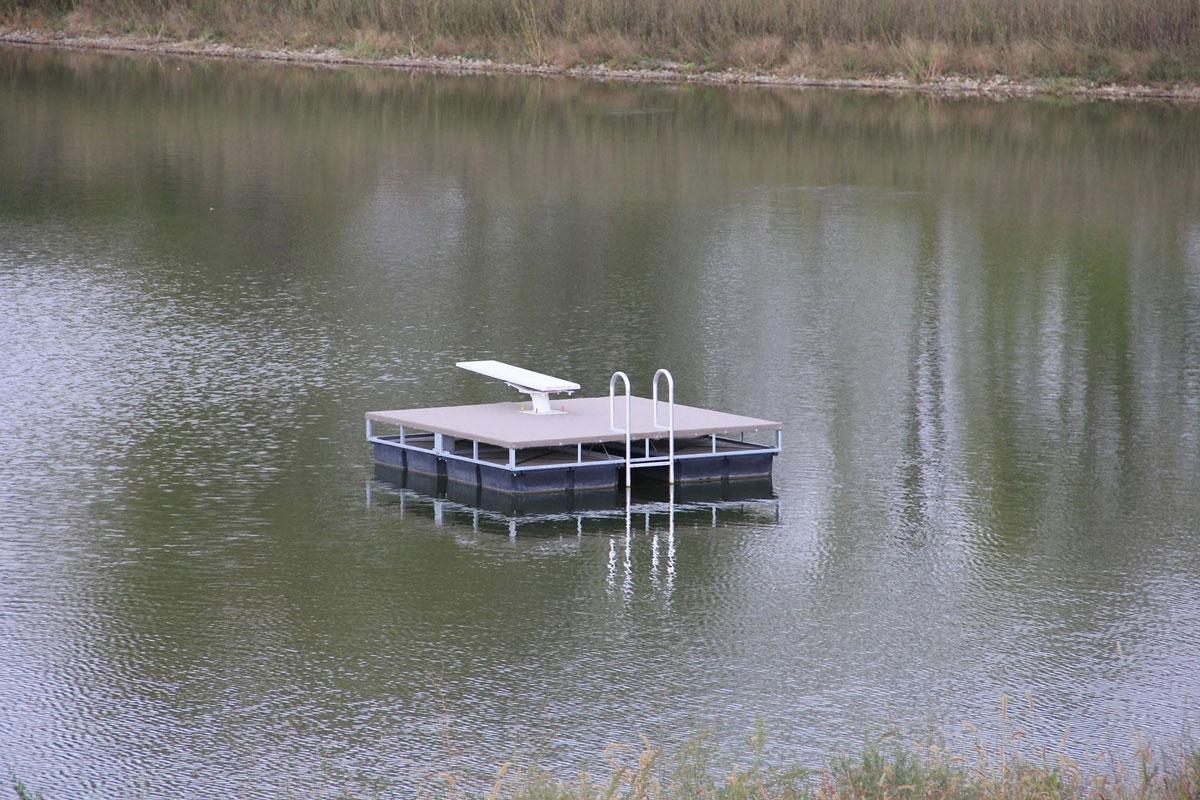
How to Choose the Right Dock for Your Lake and Shoreline
The right dock for your property depends on three things: your lake bottom, your water depth and how much it changes, and how you plan to get the dock in and out each year. A firm, shallow bottom suits a sectional dock. A soft, silty, or deep bottom calls for a floating dock. A gradual slope with a firm or rocky bottom is roll-in territory. Get those three answers first and most of the decision makes itself. This guide walks you through each condition, the honest trade-offs between dock types and materials, and the questions to settle before you spend a dollar.
Key Takeaways
- Match the dock to your water and shoreline, not the other way around.
- Soft, silty, or deep bottoms favor floating docks. Firm, shallow bottoms favor sectional docks.
- Decide up front who installs and removes the dock each year. That answer rules out more docks than any other.
- Cedar and aluminum each have real advantages. Neither wins every time.
- In Iowa, docks on public waters must be permitted and signed, so check the rules before you buy.
What should you look at before choosing a dock?
Walk your shoreline before you look at a single product page. You are checking five things.
First, the bottom. Push a post or a paddle into the lake bed where the dock will sit. If it sinks easily, you have a soft or silty bottom, and any dock that stands on legs is going to fight you. If it stops firm, legs will hold.
Second, the depth. How deep is the water at the end of where the dock will run? A boat needs enough water to float at the slip, and a dock that stands on the bottom gets harder to install and less practical as the water gets deeper.
Third, water level. Does your lake hold steady through the season, or does it rise and fall? A dock fixed at one height on a lake that swings a foot or two will spend part of the summer too high and part of it nearly underwater.
Fourth, exposure. A protected bay and a shoreline that takes the full fetch of the lake are different environments. Wind, waves, and boat wake all push on a dock every day it is in the water.
Fifth, and most overlooked: who puts the dock in and takes it out? On northern lakes the dock comes out before ice and goes back in each spring. If that job requires a crew, a barge, or an afternoon of wading in cold water, it will get put off, done badly, or paid for every single year. Be honest about who is doing this work.
Which dock works on a soft or silty lake bottom?
A floating dock. This is the clearest single answer in dock selection. On a soft or mucky bottom, posts and legs sink, tilt, and need constant re-leveling. A floating dock never touches the problem. It rides on the surface, held in place by its anchoring, and it stays level whether the bottom under it is sand, silt, or muck.
Floating docks are also the answer for deep water, where standing legs stop being practical at all. A cabin on a soft-bottom lake where standard post legs sink a little more every season is the classic case: the owner re-levels all summer, the dock still leans by August, and a floating dock ends the cycle for good.
The trade-off is honest and worth knowing. A floating dock moves with the water, so on a shoreline with heavy wave action it will have more motion underfoot than a dock standing on legs. Good frame construction and proper anchoring manage this, but a floating dock on open, rough water will never feel as planted as a sectional dock on a firm bottom in a calm bay. For a full walkthrough of this shoreline type, see our guide to choosing a dock for a soft lake bottom.
Which dock is right for shallow water and a firm bottom?
A sectional dock. If your bottom is firm and your water is shallow enough to stand a dock in, a sectional dock gives you the most solid, planted feel available, at the most economical price.
The historical problem with sectional docks was never how they performed. It was the install. Two or three people, a cold morning, somebody in waders, and a full weekend twice a year. That is the problem VW Docks solved in 1959 with the first sectional Western Red Cedar dock that one person can install, remove, raise, and lower without getting in the water. Sections average about 80 pounds, all the work happens standing on the dock itself, and the sections fold down one after another on a winch system with a patented pipe casting and adjustable heavy-gauge steel anchor plates. Standard sections are 4 ft by 7 ft, with aluminum also available in 4 ft by 10 ft. You can read the full story of how the one-person Walk On Water install works.
If a sectional dock fits your water, the install question is the one to press any manufacturer on. A dock a normal person can handle each season is a dock that actually gets maintained, adjusted, and pulled before ice. A dock that needs a crew gets neglected.
What about a gradual slope or a rocky bottom?
This is where a roll-in dock earns its place. A roll-in dock rides on wheels, so it rolls out into position in spring and rolls back to shore in fall. It wants a gradual slope to roll on, and it handles bottoms that give leg-style docks trouble, including soft spots and rock.
Rock is the condition people forget. You cannot drive a post into rock, and legs on bare rock walk around under wave action. A roll-in dock spreads its load on wheels, and a floating dock avoids the bottom entirely, so those are the two realistic options for a rocky shoreline. Between them, the slope decides: gradual and rollable favors the roll-in, steep or deep favors floating.
Cedar or aluminum: which sectional material should you pick?
Both are good docks. They serve different owners, and the question that sorts them is not which one is better. It is how much care you want to own.
Western Red Cedar is the original material, the wood this company built its first one-person dock from in 1959, and there is a reason it has never left the line. According to the Western Red Cedar Lumber Association, cedar heartwood contains natural preservatives that resist decay, and the wood resists warping and twisting better than other softwoods. On a dock, you feel that through bare feet. Cedar stays comfortable in July sun when metal decking would have you hopping, and a cedar dock simply looks like it belongs on a northern lake. It is also the most economical of the sectional lines. The trade: it is wood. It wants periodic care, a staining or sealing on a schedule, a board now and then. Anyone who tells you a wood dock is maintenance-free is selling something.
Aluminum is the buy-it-once, think-about-it-never choice. VW Docks added the aluminum line in 1996 for exactly one kind of owner: the one who wants the dock in the water each spring and otherwise out of mind. 6005-T5 aluminum, welded and gusseted corners, no staining, no sealing, no board replacement. It costs more up front and pays it back in Saturdays. Both lines install the same way, one person, Walk On Water, and both carry a lifetime warranty on the heavy-gauge steel brackets.
Here is the across-the-counter version. If the feel of wood matters to you and a little care each season does not scare you, buy cedar and enjoy it for decades. If maintenance is the thing you are trying to buy your way out of, buy aluminum and never look back. Neither buyer regrets the choice. The only one who does is the buyer who picks cedar while wanting aluminum's upkeep.
How do water levels and ice change the decision?
Fluctuating water pushes you toward floating. A floating dock rides a rising or falling lake automatically, keeping the same freeboard all season with no adjustment. A dock on legs at fixed height has to be re-set every time the lake moves, and on lakes controlled by dams or fed by wet springs, that can mean several adjustments a year. If your lake swings more than a foot in a normal season, weight this factor heavily.
Ice pushes you toward removal, whatever dock you own. Ice on upper Midwest lakes does not negotiate. It expands, shifts, and grinds, and a dock left in the ice takes that force all winter. The practical question is not whether your dock can survive ice but how easily it comes out before ice forms. This is where the one-person sectional install matters again, and where a roll-in dock's wheels earn their keep. Floating docks can be disconnected and moved to protected water or removed, and your dealer can walk you through the right approach for your lake. No dock is damage-proof. The docks that last thirty years are not tougher than the ice. They are out of the water before it forms.
What if you need an accessible dock?
If someone in your family uses a wheelchair or has limited mobility, or if you manage a public or commercial site, dock accessibility is a design question to raise at the start, not an accessory to bolt on later. Wider walkways, stable surfaces, proper transitions from shore, and rail placement all get designed in. VW Docks is a recognized leader in handicapped and accessible docks, designs each one in collaboration with the client, and will design, build, deliver, and install directly, including help with budget planning and locating funding. Start with the accessible docks page if this is your situation.
Do you need a permit for your dock?
In Iowa, yes. The Iowa DNR requires that docks, hoists, and buoys placed on public waters be permitted and signed, and fees must be paid before any portion of a dock is installed. Rules differ by state and sometimes by lake, so if you are in Minnesota, Wisconsin, or elsewhere, check with your state's natural resources agency before you buy, not after. Permit rules also shape practical choices like dock length and placement, so it pays to know them while you are still comparing options. We cover the Iowa rules in detail in our Iowa dock permits guide.
What drives the cost of a dock?
Five things, in rough order: dock type, material, size and configuration, accessories, and installation.
Type and material set the base. A cedar sectional is the most economical path onto the water. Aluminum costs more up front and less attention over time. Floating docks are custom-built to the site, so their cost follows the design. Size and configuration matter more than most buyers expect, because a dock is priced by what it takes to build, and an L or T layout with a swim platform is simply more dock than a straight run. Accessories like benches, ladders, railing, and bumpers add up, though they are also the cheapest part to add later. Installation is free if you do it yourself, which is exactly why the one-person install exists.
Think in years, not sticker price. A dock is a long-term purchase, and the cheap dock that needs replacing in a few seasons costs more than the right dock bought once. Every VW Docks purchase is quoted to the specific dock and site, so the way to get a real number is to request a quote.
Where VW Docks fits into this decision
VW Docks has designed, built, and installed docks in Spirit Lake, Iowa since 1959, and the product range exists so the dock can match the water: sectional cedar and aluminum for firm bottoms, residential and commercial floating docks for soft, silty, deep, or fluctuating water, roll-in docks for gradual slopes and rocky bottoms, and accessible docks designed with the client. Every dock line is built under one roof and sold through a dealer network across the upper Midwest, so there is a local person to walk your shoreline with you. If your water fits one of the conditions above, the matching line is where to start reading.
Frequently Asked Questions
What is the best dock for a lake with fluctuating water levels?
A floating dock. It rises and falls with the lake, so the deck stays the same height above the water without adjustment. Docks on fixed legs need to be re-set every time the water level changes by more than a few inches.
Can one person really install a sectional dock?
Yes, if the dock is designed for it. VW Docks sections average about 80 pounds, and the Walk On Water system folds sections down one after another using a winch, with all the work done standing on the dock. One person can install, remove, raise, and lower the dock without getting in the water.
Is a wood dock or an aluminum dock better?
Neither is better across the board. Cedar is more economical, comfortable underfoot, and naturally decay-resistant, but benefits from periodic care. Aluminum costs more and needs no staining, sealing, or board replacement. Choose based on how much upkeep you want to own.
Do I need to take my dock out of the water in winter?
On upper Midwest lakes, removal before ice is the safe default for sectional and roll-in docks, and floating docks should at minimum be moved out of ice's reach. Ice movement is the single hardest force a dock faces, and no dock is damage-proof.
How long should a dock last?
A well-built dock that comes out before ice and gets basic care should serve for decades. Build quality, material, ice exposure, and maintenance all matter more than any single spec, which is why buying once and buying right beats replacing a cheap dock every few seasons.
Still weighing it? The fastest path to a straight answer is a conversation about your specific shoreline. Find a dealer near you or request a quote and tell us about your water. We have been matching docks to lakes since 1959.
Share This Post
Comments
Read Our Other Blog Posts.
